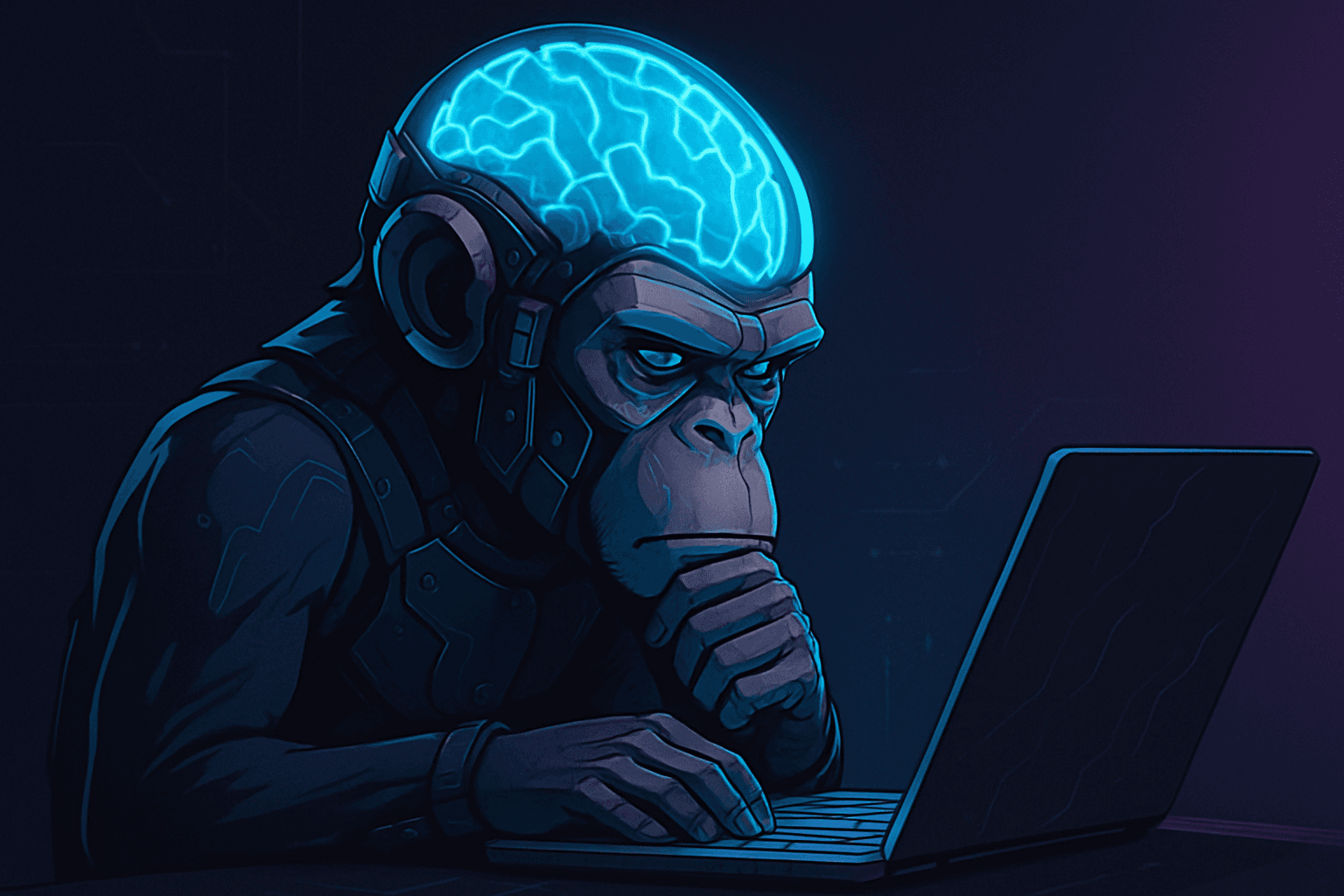
We're at a defining moment in the evolution of frontend development. Artificial Intelligence is no longer a distant concept—it's here, integrated into our tools, workflows, and increasingly, our ideation process. With the rise of platforms like V0, Luvable, Base44, Cursor, and others, it's clear that AI is reshaping how we build digital products.
But let's be honest: AI won't replace all Frontend developers. What it will do is dramatically shift how we work, what skills we need, and how many people it takes to ship a product.
From Code Monkeys to Product Pilots
If you look at history, disruption follows a familiar pattern. Horse riders became carriage drivers, then taxi drivers, and now we have Uber—and in the future, autonomous vehicles. Yet, even with self-driving cars advancing, we still have human pilots supervising.
The same is happening in software.
AI can scaffold out a full UI from a simple prompt. V0, for instance, lets you describe an app or website in plain English and instantly see a React or Tailwind UI rendered. Cursor, a VS Code-style editor powered by AI, can help refactor codebases or even auto-complete entire feature implementations.
This isn't about eliminating frontend jobs—it's about amplifying what one skilled person can do. A frontend engineer today using AI tools effectively might produce 5x to 10x the output compared to one a few years ago. That means fewer people needed per project, but the value of those individuals? Skyrocketing.
Tools Reshaping the Workflow
Let's look at a few examples:
V0 by Vercel
Converts natural language into working UI components using Tailwind and React, NextJs at their newest libraries, and even imports from Figma!! Ideal for quickly mocking up interfaces.
Lovable
An AI product builder that allows you to go from idea to deployed product with minimal manual coding. It's like having a junior dev, product manager, and designer rolled into one.
Base44
Helps teams build full-stack apps with AI co-pilots that understand context and project architecture.
Cursor
A code editor reimagined with AI at the core—context-aware, codebase-savvy, and great for both beginners and senior devs.
These tools are not just novelties; they are the new standard. And they're still evolving rapidly.
The Skills Frontend Developers Will Need to Adapt
To thrive in this AI-assisted era, developers will need to rethink what it means to be "technical." The hard skills—JavaScript, React, CSS—will still matter, but soft skills, system design, and product thinking will become more critical than ever.
Here's what adaptation might look like:
- Prompt engineering: Knowing how to communicate with AI effectively.
- System design & architecture: AI can build components, but humans will still design scalable systems.
- Critical thinking: Understanding when AI is wrong or when the UX doesn't match the product vision.
- Tool mastery: Staying updated with the latest AI tools and plugins will be as important as staying current with frameworks.
We'll Always Need Humans—Just Fewer of Them
The uncomfortable truth? The number of frontend devs needed to build something will drop.
That doesn't mean mass layoffs. It means more solo devs building MVPs. More startups scaling with leaner teams. More freelance developers managing multiple clients simultaneously. More demand for highly skilled individuals who can do more, faster.
And yes, it may also mean a shrinking middle—those doing repetitive, non-specialized work might find themselves squeezed out unless they level up.
But here's the good news: The ceiling is higher than ever. With AI, a great developer becomes a 10x developer—not because they type faster, but because they delegate smarter. A team of 1 developer, 1 marketer and 1 salesman can deliver amazing Sass products faster than ever.
In the old days we used to go to the library and take a book or open the Enciclopedia in order to learn a specific topic. Afterwards we needed to search in forums, Google, and Wikipedia. Now the AI is our GOTO tool, so we can receive the information faster, and produce and learn faster, but still doubt and to concern the knowledge.
Final Thought
We're not being replaced. We're being repositioned. The Frontend developer of the future won't just be a coder—they'll be a product pilot, a designer-developer hybrid, and an AI orchestrator. And that's exciting.
The only thing I am curious about is in the next couple of years, that all those AI engines are learning from current code bases made by experts. When the moment will come that the AI will learn from itself. Or the amount of people writing themselves actual code will reduce. I find the possibility that the level of the code will reduce accordingly. The same concern about the image generating we have but in code. So I am thrilled to see where the future will bring us.
As long as we stay curious, keep learning, and evolve with the tools, we'll not only survive this shift—we'll thrive in it. I am an independent freelancer. I HAVE to stay updated with the newest technology in order to offer the best services and my high proficiency skills.